The Realm Of Light
15/02/2025-22/03/2025
SOKA ART, Beijing, China
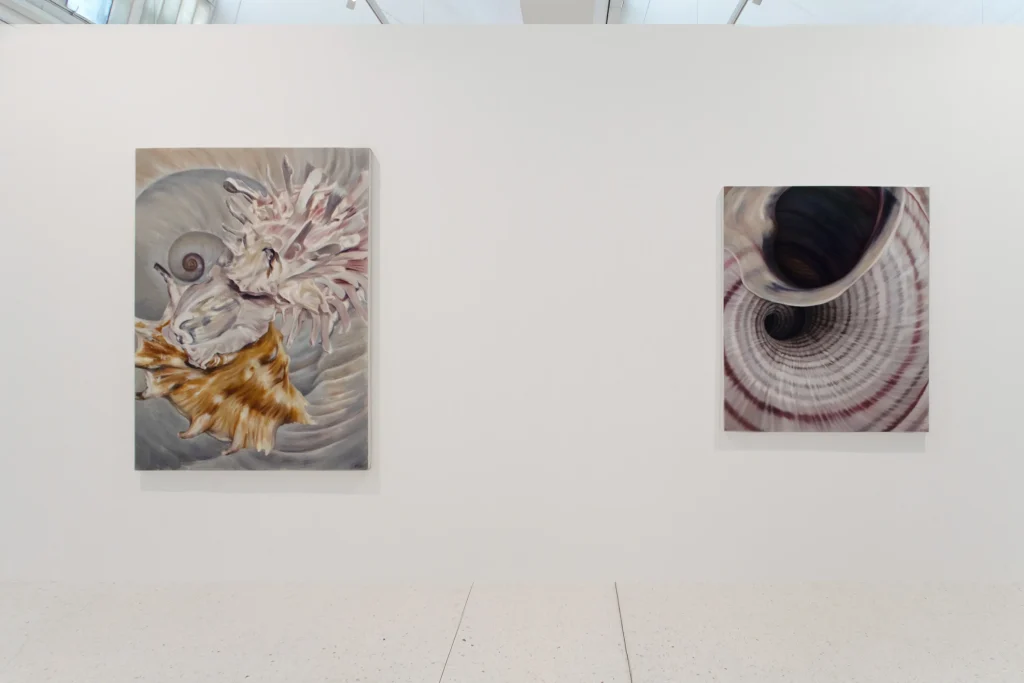
The Realm of Light
Text/Ning Wen
“The artist must have something to say, for mastery over form is not their goal but rather the adapting of form to its inner meaning.”
— Vasiliy Kandinsky
In philosophy, “light” is often used to symbolize enlightenment and truth. In The Republic, Plato describes an ideal state, comparing the “highest good” to the light of the sun, which he considers the source of the world of ideas, perceivable only through the “eye of the soul.” In ancient Eastern wisdom, “light” holds similar symbolic meanings. For example, in Buddhist thought, “The realm of light” resembles the Pure Land, symbolizing a world of purity attained through enlightenment and liberation. In Taoist philosophy, the realm of light symbolizes a transcendent heavenly realm. In Laozi’s philosophy, light and its resulting phenomena of brightness and darkness serve as metaphors for the mind’s capacity for knowledge. Laozi uses light as a metaphor to guide practitioners to reflect on and transcend the dualistic structure of things and language, realizing the Tao that is both bright and dark, neither bright nor dark, and ultimately nameless. This can be understood as a pursuit of transcending worldly cognition to achieve a state as clear and authentic as “light.”
光之国度
“艺术家必须有话要说,掌握形式不是他的目标,而是使形式适应其内在意义。”
The artist must have something to say, for mastery over form is not his goal but rather
the adapting of form to its inner meaning.
——康定斯基(Vasiliy Kandinskiy)
撰文/宁文
在哲学中,“光”常被用来象征启蒙与真理。柏拉图在《理想国》中描述了一个理想的国度,将“至善”比作太阳之光,认为它是理念世界的源泉,只有通过“心灵的眼睛”才能洞察到这种光。而在东方古代智慧中,“光”也有类似的象征意义。比如在佛家思想中,“光之国度”类似于净土,象征觉悟与解脱的纯净世界;在道家思想中,“光之国度”则象征超越的天界。在老子的哲学中,以光及其引起的明暗现象作为人心之知能力的譬喻。老子以光喻知,旨在引导修道者反思、超越物与名言的二元结构,体悟即明即暗、非明非暗、混一无名之道。这可以理解为一种对超越世俗认知,达到如“光”般澄澈、本真境界的追求。